
The Way Forward
The essay that won a Creators of Justice Award. The piece that maps a way to lost hope.

This essay won an award. That year I came second in three big writing competitions and my writing practice was on fire. Then severe autistic burnout kicked in and I lost the ability to write creatively for longer than I care to remember.
I’ve written four short stories and two essays in the late night hours of the last month. My writing mojo is back! I don’t have the words to express how much I have missed the monotropic flow of words and world-creating. There was a part of me that wondered whether I would write fiction again. To say I’m grateful is an understatement. Writing is how I make sense of the world.
I’ve been going back through my writing files and thought to share a few of my favourite pieces with y’all. The world seems such a mess. Hope is precious but also fierce. For me, this essay is about missed opportunities, exploring my ancestors belief systems, making sense of misplaced anger & fear, acknowledgement of trauma and a seeding of hope for the future.
Here you go…
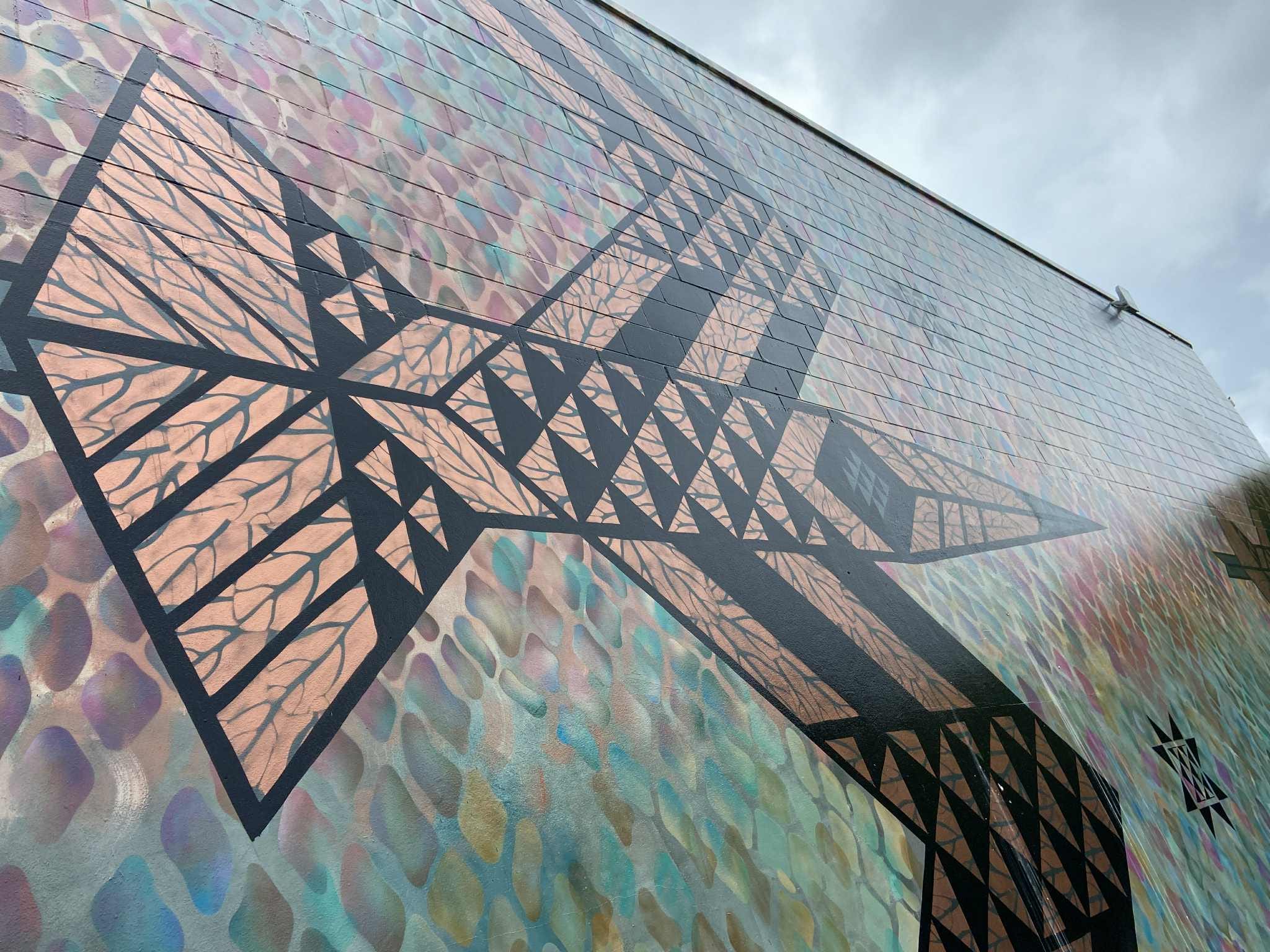
The Way Forward
The dream for many is a better world. One where humans care for each other, have a sense of where they stand in the lines of blood and belonging and have a deep connection to the land and sky and the waters that bridge them. To have all aspects of oneself nurtured into wellbeing - spirit, mind, body and family.
I hear variations of this utopian dream from those wanting to build intentional community, town planners talking about sustainable city design, community organisers, writers, parents wanting a better future for their kids, unionists, health workers – all sorts of people. They are often surprised to hear that their vision is already framed in Te Ao Māori.
You should see the recoil when I share that pākehā too, lived their own holistic world view back in old mama Europe. Reactions remind me of when I tell people about the migration of tuna, our longfin eel, to the deeps near Tonga and the return of their offspring. People don’t believe that either. They google it when I am not looking.
Both are true. Bear with me.
That old trope, that pākehā don’t have a culture, gets rolled out to condone the appropriation of other cultures, to justify arrogance. They are empty words. New Zealanders with European ancestors are descended from those who were connected to the land and its creatures, gave thanks to nature deities, looked to the stars for signs and to the moon with wonder. Nature was sustenance, guidance and solace. Our ancestors had meeting houses, community, song and stories. This has been called paganism, or earth religion, but its people did not call it that. It was simply their way of life. The Old Ways.
Our year was held in pauses of celebration and reflection, with festivals of fires, feasts and gatherings at the equinoxes and solstices. These holidays were stolen. Appropriated. The sensual riot of fertility celebrations of Eostre sanitised into the cute bunnies and chocolate eggs of Easter. All Hallows Eve, or Samhain – a Gaelic and Celtic festival celebrating the end of the harvest and honouring ancestors – divorced from its origins, became mostly known for fancy dress and the consumption of sweets, North Americanised into Halloween. Google it.
Travelling around Europe in our van years ago, my partner and I sought out the old churches, hunting out remnants of the shrines and sacred places wrestled into submission by the Church. We would lift an altar cloth to find a Sheela-na-gig lurking in brazen labial glory, or find Pan carved into a stone lintel in a hidden chapel corner, leering. In the years since those figures were carved, being connected to the tides of life has been ostracized, seen as infantile, dangerous or primitive. The Old Ways went underground, hidden. And mostly died out.
White folks have turned our backs on this part of our history. We fell prey to the rhetoric of industrialisation and have continued the coloniser’s work of ridiculing the Old Ways. Then went off to colonise in turn. It reminds me of kids running amok in playgrounds – one bullies, then that child turns and plays out the same. Abuse is like that. It gets normalised, the trauma entrenched. History repeating. Unhealed wounds seeping poison at the heart of the Western world.
To be connected to the web of life became deeply uncool.
I had just read the comments on a news article about the indigenous people’s report, He Puapua, in the park - and was left reeling on my wooden bench seat. Where, I wondered, does the fear of Māori-led initiatives come from? A kind of cellular envy? At the roots of that fear, are we jealous of Māori connected to the land, sea and sky – with marae, iwi and hapū to return to– when we walked away from the legacy our ancestors fought so hard to protect?
Are we jealous that we have forgotten how to sing and we envy the ease of song? That marae stand strong and our meeting houses are crumbled to dust and worse, forgotten?
I look up from the bush and sky framing the park and force my gaze wider, to the green fields, wise maunga, and compromised waters of Aotearoa. I think of the people Papatūānuku claimed as her own, Tangata Whenua. And those of us migrants who dropped in, uninvited. Tangata Tiriti. The visitors that never left. Whose behaviour was so bad it necessitated a treaty lest the ‘hell-hole of the Pacific’ spread further.
I consider the pile-up of injustices over the years, the wrench of disconnection my ancestors bestowed unthinkingly upon Aotearoa’s first people. Those ships’ arrival heralded war on a way of life in balance with the earth. A way of being where humans are an integral part of the web that is life, not human as destroyer, separate and superior, all arrogant dominion.
I’m not saying life in Aotearoa was idyllic prior to our original rude overstay. I lived in intentional community for too long to believe that. Utopian idylls belong in science-fiction novels and even those stories need conflict and drama to be a believable read. Pre-pākehā arrival Māori had their wars and troubles. It’s called being human. But what they did have was deep-rooted connection to the land, culture and sovereignty. Choice. Freedom of direction. Ask the incarcerated what taking away those basic human rights does to a person.
Some Tangata Tiriti are unpacking the racism intricately woven into the institutions, media and dinner table conversations across this land. Some are learning te reo Māori and tikanga, nurturing care and respect for the systems and values of Te Ao Māori. This work gives me hope. It gives a glimpse into what could have been, had pākehā approached these shores with respect and a willingness to learn. Ka rawe. We are learning. Unlearning and learning.
Our worldview and the very gaze we look out at the world with, grew out of colonisation. The shutting down of difference, the lack of care for community, the ticking of boxes way of life, the harsh severing of the roots into the earth that sustains us – are woven through our thoughts and development from conception on. Identifying them and tugging them free must be uncomfortable. Painful. Along with the sense of release and rightness that surely follows.
My thoughts turn to the people who would never call themselves Tangata Tiriti. Those who freaked out when Guyon Espiner started speaking more te reo Māori onto RNZ airwaves. Those who still live rigid with fear. Those with minds held captive by outdated and untrue stereotypes, devoid of understanding the multi-generational impacts of trauma. Those squawking in those comment sections of news articles on Māori-led health reform and Treaty settlements.
I wonder at their intelligence. Not their academic worth, or their ‘I-speak-fluent-corporate’ sort of smartness but the intelligence that matters. The one the universe gives a tick to. The only kind that counts – being able to see how life is a web. Interconnected.
Whenua. People. Creatures. Sky. Fungi. Sea. Stars. Tardigrades. Tuna. Me. You. Us. Them. Mosquitoes.
How can people be so wilfully ignorant? Refute the insights that come from indigenous knowledge of how to live in balance with practices honed in hundreds of years, while coloniser’s greed and capitalist creed rips, tears, sells, steals, poisons, separates and impoverishes? And, as it turns out, endangers us all.
Climate change anyone? No one wins. Yet some are hurt more than others. I wonder again if the origins of this irate, affronted mindset is envy.
I think of my ancestor Sarah. A wild haired woman, rumoured to have been a practitioner of the Old Ways. Words spoken in hushed tones that echoed through the generations until they stuck to me too. Sarah was a quiet rebel in her time. Her people, our people, had been persecuted in witch hunts, raids and laws, their symbols appropriated and holidays stolen, perverted to serve another purpose. Sound familiar?
The Old Ways were largely wiped out. Impoverished by loss of agency and by the persecution of those who spoke up against a crusade that demanded silence and conformity under threat of gaol, loss, injury, death. Along with the loss of land, the parceling up of the wilds into private property and the white-coating of medicine came the poisoning of our minds. The taming of our bodies, with dance and ceremony outside of the ordained church ones frowned on, made illegal in some places.
It gets me in the gut every time I hear pākehā say, ‘We have no culture’. Because not so long ago, we did. We just failed to carry it in our hearts. The evidence is sitting in plain sight in history books and cloaked in under altar cloths. Our artefacts dusted off by archaeologists.
The way back to that connected way of living is available to us all. You can find clues in the wind, feel it whenever our feet are bare and still on the earth.
Most of all, I think, those of us descended from colonisers need to listen. Listen deeply. It is not our time to speak. It is time to unlearn. Learn anew.
The legacy of colonisation does no one favours, but it robs Māori still. Daily doses of casual racism weigh heavy, the insidiousness of institutionalized racism is sneaky, remaining even when no racist individual is left. Culture of origin carries. Some things are better burnt to the ground than reformed. Those most negatively affected need to lead. Be given the support and trust to create fresh.
There is much to learn from Te Ao Māori - from all indigenous peoples. And by this, I don’t mean to put the weight of our learning on the First Nations. They are burdened with our ignorance already, dealing with the compounded effects of colonisation over generations, over-consulted and undervalued for their counsel.
Be inspired by indigenous ways, sure. But the way forward is mapped in our past. It is in connecting with nature. The Old Ways are in the beat of wings, the rush of wind and the moon-tug of water in our very bodies. We are not separate from Nature, we are Nature. We are part of an interconnected, rich and stunningly complex and beautiful whole. That is science. Not up for debate. It is time to remember that.
It’s time.
Creators of Justice Award 2022. Second place. International Human Rights Arts Festival
It’s up on their website HERE. For those wanting the audio, hold tight, I have set aside time to record shortly. x
Ever loving thanks to Desna for giving me a hard time about missing macrons! Thanks sis.
Ka mau te wehi...kei te tautoko au nga kupu tēnei 💙
I love this - I have shared across platforms on FB and Bluesky too x